

Top-tier video games evoke a sense of immersion, making players feel like they're stepping directly into the game’s universe. However, virtual reality elevates this experience even further. It enables gamers to view the environment entirely from their digital persona's perspective and engage with it in ways that would be either unachievable or highly inconvenient using traditional console gaming setups. Contemporary VR devices offer stereoscopic 3D graphics enhanced with head and eye-tracking capabilities, along with motion-detecting controllers that let you visualize your character’s movements instantly. These features significantly narrow the divide between player and gameplay.
Up until around 2016, virtual reality was mostly considered a remnant of the 'totally rad' Cyberpunk trend from the 1990s. By 2025, although it hadn’t become widespread among typical gamers, it had certainly found its own dedicated following amongst those seeking experiences unmatchable in conventional video games. While virtual reality may not have revolutionized the industry yet, this tech has evolved from science fiction dreams into tangible realities and more. Join us as we delve into the evolution of VR.
Read more: 10 Bluetooth Devices You Should Seriously Consider Purchasing
Science Fiction Origins

When discussing technology, anything that becomes a scientific reality must initially emerge as a concept in science fiction. This also applies perfectly to virtual reality. Pygmalion's Spectacles A 1935 short story penned by Stanley Grauman Weinbaum features a protagonist who uses goggles capable of immersing him in a virtual reality experience. The inventor mentions within the narrative that possible backers rejected his groundbreaking creation due to its high cost—a criticism that continues to be directed at actual VR devices even today.
Meanwhile, Ray Bradbury's 1950 short story titled " The Veldt chronicles a family of four residing in an entirely automated smart home long before such technology became known. This residence includes a virtual reality space dubbed 'The Nursery,' where the household’s children develop an addiction, approximately 65 years prior to theBaby Shark YouTube channel garnering billions of views.
Jump ahead to the 1980s with the introduction of the Holodeck in "Star Trek: The Next Generation," although this idea first surfaced in "Star Trek: The Animated Series." This device offers an entirely immersive, glasses-free virtual reality environment that mimics actual life perfectly. It seems as though today’s advancements in VR technology aim towards achieving something akin to the Holodeck; however, it might take several decades or longer before we see such a sci-fi vision come to fruition in our world.
Early Applications

The initial VR applications were not aimed at entertainment or leisure activities; instead, they focused on training simulators. As shown in the image above, this was exemplified by NASA’s Cockpit Motion Facility (CMF). Constructed back in 1976, this motion-based simulator could mimic the movements and vibrations experienced during actual flights or space missions, enabling astronauts to undergo highly immersive training sessions. Even prior to this, General Electric developed the very first VR flight simulator way back in 1972, specifically designed for earthbound airplane pilots. This innovation allowed aspiring aviators to gain superior preparation without ever leaving the ground.
In the realm of head-mounted displays, the initial prototype emerged in 1968 at the hands of Dr. Ivan Sutherland, who was a pioneer in both computer science and the nascent stages of 3D graphics technology. During the '70s and '80s, innovations such as wired gloves and tracking systems for head-mounted equipment were created and utilized primarily by organizations like NASA, the military, and various cutting-edge entities. As these tools evolved over time, visions of domestic virtual reality started shifting from mere possibilities towards becoming certainties.
The Cyberpunk Era

Although science fiction has existed since the inception of scientific thought coupled with narrative storytelling, the term "cyberpunk" was not introduced until Bruce Bethke’s 1983 short story titled “Cyberpunk.” Over time, as this literary movement progressed, it became evident how human interaction with advanced computing technologies would inevitably spawn pervasive themes of virtual realities within these narratives. Notable writers such as William Gibson and Neal Stephenson played pivotal roles in shaping public understanding of digital cultures and expanding visions of what could be achieved through cyberspaces.
The image originates from the 1992 movie, "The Lawnmower Man." In this film, a intellectually disabled individual (played by Jeff Fahey) undergoes virtual reality and pharmaceutical therapies aimed at enhancing their mental capabilities. Although I won’t reveal specific plot points, it’s an excellent science fiction suspense flick for its era, utilizing state-of-the-art CGI visuals—considering when it was made—to portray digital realms inside cyberspace. While these special effects may seem outdated compared to modern techniques, they still effectively convey the surreal nature of the depicted virtual realities within the film’s setting.
Too Much, Too Soon
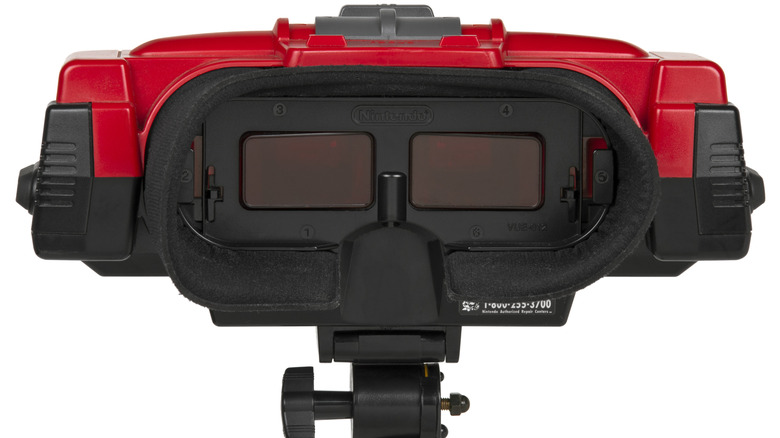
Unfortunately, despite movies such as "The Lawnmower Man" making virtual reality appear to be an impending innovation, the actual technological landscape was not as progressive. Following the surge of excitement around VR fueled by sci-fi narratives, this momentum waned during the 1990s due to several setbacks. high-profile VR failures , particularly with Nintendo’s Virtual Boy. This system did not feature any form of motion tracking and the screen was not worn on the head; instead, players needed to press their faces directly onto the device, much like using those stationary telescope stations found at New Jersey's Liberty State Park for viewing the Statue of Liberty. Despite being able to produce stereoscopic 3D graphics, the Virtual Boy suffered from weak processing power and could only render images in stark combinations of red and black.
In the 1990s, several prominent virtual reality failures emerged, such as Virtual IO’s I-Glasses, Sega’s Virtuality, and another model called the VR-1 from Sega itself. The VR-1 garnered acclaim during its installation periods across different Sega-themed amusement areas due to its superior craftsmanship relative to contemporary standards; however, when Sega scaled back their plans for these entertainment venues, interest in the VR-1 waned accordingly. Additionally, there were intended expansions for use with the Sega Genesis and Atari Jaguar systems, yet those projects were ultimately shelved without much fanfare.
Nintendo Wii/PlayStation Move/Xbox Kinect
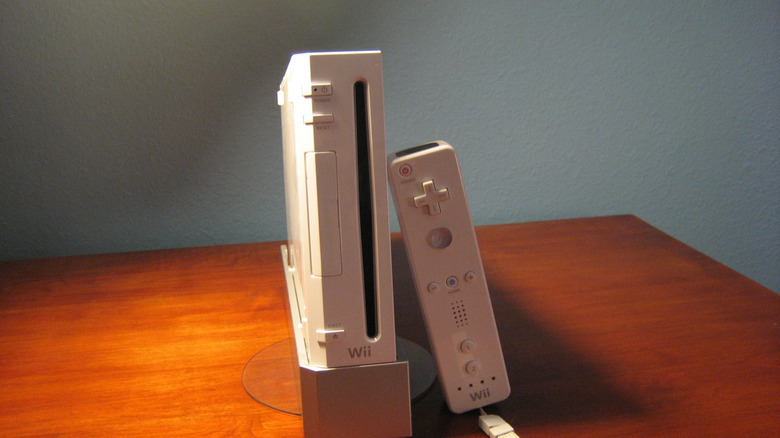
After the dawn of the new millennium, virtual reality largely faded away, becoming nothing more than a fixture in science fiction narratives or an object of ridicule from the exaggerated expectations of the 1990s. Yet, beneath this surface, technological advancements were brewing that would unknowingly lay the groundwork for the resurgence and evolution of VR in the coming era.
In 2006, Nintendo introduced the Wii home console, sparking a major sensation. Two elements primarily contributed to the widespread popularity of the Wii. Firstly, it had an affordable price tag; selling for just $250 made it significantly cheaper compared to Sony’s PlayStation 3, which retailed at a steep $599, as well as being more budget-friendly than Microsoft’s Xbox 360 priced at $300 upon launch. Secondly, what truly set the Wii apart was its innovative feature—its user-friendly motion control system that virtually everyone found easy to grasp. Titles such as “Wii Sports” and “Just Dance,” designed with casual gamers in mind, captured global attention and appealed equally across generations from children to adults and seniors.
Aiming to capitalize on the popularity of the Wii, both Sony and Microsoft aimed to incorporate similar motion-control features into their respective systems. Sony introduced the PlayStation Move, which was essentially a clone of Nintendo’s Wiimote but unexpectedly proved beneficial during the PS4 generation (we'll delve deeper into this aspect subsequently). On the other hand, Microsoft developed Kinect, a gesture-based controller for Xbox 360 that set itself apart from the Wii with distinct functionalities.
Oculus Rift
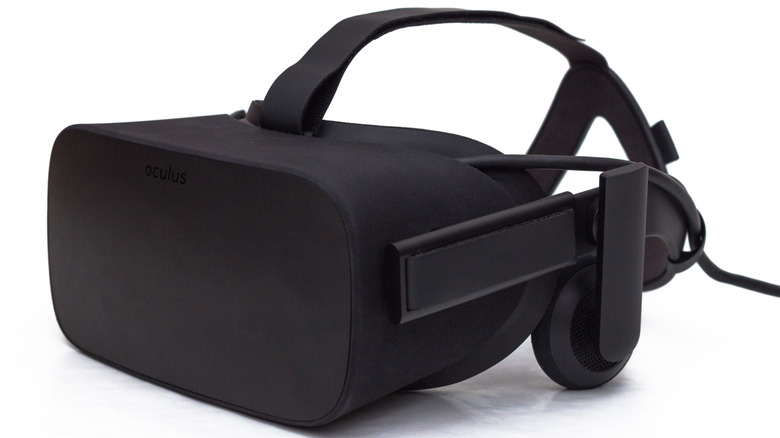
Palmer Luckey, one of the founders of Oculus VR, is often recognized as the pioneer of contemporary virtual reality. In 2012, his firm initiated a Kickstarter campaign aimed at funding the production of Oculus Rift developer kits. They offered an advanced yet reasonably priced VR solution when contrasted with equipment utilized by organizations such as NASA and the military. This crowdfunding effort gained significant traction, drawing interest from prominent figures in the gaming industry including John Carmack and Gabe Newell. Their endorsements underscored that virtual reality stood on the verge of experiencing substantial resurgence.
As work progressed on the Oculus Rift throughout 2013 and onwards, rival firms recognized the unexplored possibilities of virtual reality and joined the race. By the close of the decade, HTC, Valve, Google, Sony PlayStation, among others, had launched their respective VR systems. Interestingly, Nintendo also ventured into this domain with its experimental Nintendo LABO kit made from cardboard; however, it functioned more as an intriguing gimmick rather than a serious contender in the realm of VR platforms.
Facebook Buys Oculus

Given this influx of players into the VR market, it was inevitable that consolidation would occur. Nevertheless, not many anticipated that Facebook would acquire Oculus VR for an astounding $2 billion back in 2014, prior to releasing their first consumer-ready device. Although the initial Oculus product eventually launched in 2016, the company’s branding gradually faded away in subsequent years as it was superseded by Facebook's Meta branding Ever wondered why there’s a Meta Quest 2 and 3, yet no Meta Quest 1? The reason is that the Oculus Quest 2 was relabeled as the Meta Quest 2 in 2022—two years post its first launch. No device ever bore the title Meta Quest 1; however, the original Oculus Quest launched back in 2019 can be considered the precursor to what we currently recognize as the Meta Quest series.
It’s likely that Facebook leveraged its substantial resources to acquire rights for VR titles from major franchises such as Assassins Creed, Batman: Arkham series, the forthcoming Deadpool VR experience, and even a 2021 VR adaptation of Resident Evil 4 — specifically referring to the classic game rather than the 2023 remake, which has its own dedicated VR support exclusively available on PlayStation VR2. This situation with dual VR renditions of Resident Evil 4 tailored for separate platforms indicates ongoing intense rivalry within the virtual reality market.
PlayStation VR
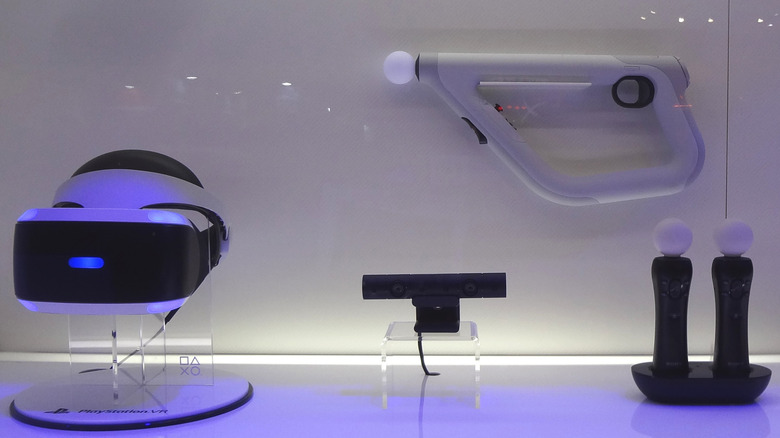
As the virtual reality boom gained momentum, it became clear that one of the major home console manufacturers would eventually leverage this cutting-edge tech to expand gaming beyond just the conventional PC environment. In 2016, Sony decided to take the leap into this domain. PlayStation VR , which utilized existing technology to reduce expenses, for better or worse.
The PSVR employed a somewhat modest device (offering 1080p resolution and a 100-degree field of view), yet it surpassed expectations within the context of 2016 technology norms. Cleverly leveraging the PlayStation 4 Camera—a peripheral released alongside the console back in 2013—it also recycled the older PlayStation Move controllers from the PS3 days as its virtual reality input devices. While this approach may not have been the most refined option, it stood out due to its accessibility and affordability despite launching at around $400. However, critics pointed out issues such as inconsistent motion-tracking performance associated with the PlayStation Move controllers and criticized the setup process for involving numerous cables, along with needing an additional external adapter connected between the PS4 and the PS VR unit.
VR Arcades

The allure of VR is clear, and the technology has never been easier to access; however, it remains an expensive pastime, particularly for gaming enthusiasts. Purchasing a VR headset along with either a compatible video game console or high-end computer is just step one. The real cost comes when you start acquiring games. Those interested in trying this technology without breaking the bank or lacking sufficient room at home—where flailing limbs might lead to accidental breakages like shattering windows or bumping into roommates—can opt instead to visit a virtual reality arcade.
VR arcades closely resemble traditional video game arcades, except for video game machine cabinets Each station consists of a computer paired with a VR headset, possibly complemented by an assistant to assist users throughout their virtual journey. Besides standard VR arcades offering widely accessible commercial technology, there are premium setups such as Sandbox VR which feature custom-designed VR experiences tailored around franchises like "Rebel Moon" and "Squid Game." These immersive environments are particularly enjoyable when experienced collectively by groups of friends.
A prominent player in the VR industry was The Void, known for offering immersive experiences tied to popular brands. However, the firm faced severe financial difficulties compounded by the economic impact of the COVID-19 pandemic, leading to the closure of all its venues. Consequently, fans can no longer enjoy VR journeys featuring iconic series such as "Star Wars," "Ghostbusters," "The Avengers," "Jumanji," among others.
Augmented Reality

Alongside the growth of virtual reality, we've witnessed the emergence of augmented reality (AR) in recent times—a closely related tech to VR that employs transparent lenses and/or external cameras to create an illusion for users that digital imagery appears directly within their environment. Early forms of this technology were utilized in devices like the Nintendo 3DS and PlayStation Vita; however, these systems primarily focused on changing backdrops using visuals recorded from their built-in cameras without adding significant complexity.
More contemporary versions of AR appear as headset devices such as the Magic Leap. Apple Vision Pro Smart glasses, or similar devices, enable users to integrate computing into their everyday lives by wearing what amounts to a computer directly on their faces, offering a head-up display (HUD) reminiscent of an updated but decidedly less flashy version of Iron Man’s technology. Unlike virtual reality systems which focus more on gaming, augmented reality (AR) equipment is better suited for regular activities. This makes it possible for individuals to stay connected in ways that go beyond what even smartphones can offer. One could easily envision scenarios where AR enhances experiences such as driving, performing office work, and managing large volumes of information across various tasks.
The Essential Program, Half-Life: Alyx

Valve was somewhat late to join the virtual reality arena, yet their 2019 release of the Valve Index headset garnered acclaim for being state-of-the-art initially; however, it didn’t have an exclusive title to drive sales until nine months afterward. In March 2020, they introduced what became the ultimate application demonstrating the potential of VR gaming: "Half-Life Alyx."
Set between the events of "Half-Life" and "Half-Life 2," Alyx centers around the titular character who takes players through the most immersive experience so far. By harnessing the capabilities of virtual reality, this game offers an unmatched level of interaction, particularly benefiting those using controllers equipped with sophisticated finger-tracking technology. In addition to extensive combat sequences, "Half-Life: Alyx" presents numerous other situations designed to showcase innovative uses of VR technology.
Beyond its reputation as an outstanding VR title, "Alyx" managed to transcend the confines of the specialized virtual reality marketplace thanks to being the highly anticipated comeback of the "Half-Life" series, which had remained inactive since 2007. To be precise, "Half-Life" ranks among the most revered franchises in gaming history; thus, the announcement of a fresh installment designed exclusively for VR garners attention even from those who are typically skeptical about technological advancements. Up until now, "Half-Life: Alyx" has achieved sales exceeding two million units.
The State Of VR

In 2023, the launch of the PlayStation VR 2 garnered unexpectedly low attention, even though it made notable advancements in virtual reality technology. The PS VR2 enhanced various aspects over its predecessor, including its built-in cameras, specialized controllers, and significantly better visual fidelity. Despite being priced at a substantial $550, making it rather costly, it remained competitively positioned within the VR market segment.
The release of new games for the PS VR2 has been sluggish due to the absence of backward compatibility with PlayStation VR titles. However, several notable exclusives stand out, such as "Horizon: Call of the Mountain," along with VR versions of "Resident Evil Village" and "Resident Evil 4 Remake."
In 2024, the Meta Quest 3S was launched as a wireless entry-level VR headset. Bundled with “Batman: Arkham Shadow,” this exclusive title received excellent feedback and highlighted that although VR remains somewhat specialized within the broader gaming market, high-quality experiences await enthusiasts committed to the platform. Additionally, during their June 2025 State of Play event, Sony unveiled multiple titles for PlayStation VR 2 and other VR devices such as "Lumines Arise" and "Thief VR: Legacy of Shadow." While VR gaming hasn’t become central to the industry as once speculated, it definitely maintains momentum.
The Near-Term Outlook for VR
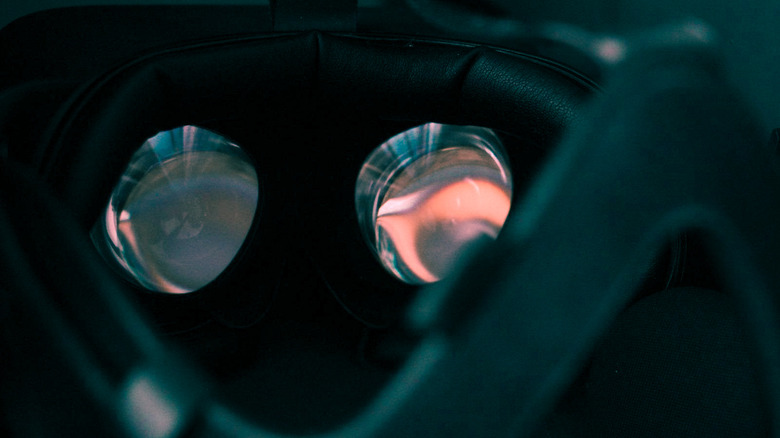
Customers are eagerly anticipating the subsequent major advancement in the virtual reality revolution. New models such as the PlayStation VR 2, Meta Quest 3, and HTC Vive Focus Vision represent incremental enhancements over their predecessors; however, the importance of the wireless capabilities included in both the Meta Quest and Vive Focus Vision should not be underestimated.
Since the release of their Valve Index headset and Half-Life: Alyx back in 2020, Valve has maintained a notable silence regarding virtual reality technology. The company is well-known for disappearing from public view for extended periods. However, recent whispers indicate they might currently be developing a next-generation VR device dubbed "Project Deckard." Assuming this project isn’t just speculation, what fresh features might it introduce? A wireless linkup with PCs appears almost obligatory now. Although VR headsets have become sleeker and less cumbersome over time, they remain relatively large and may cause discomfort after prolonged use. Ideally, someday we’d see them as compact as swim goggles or stylish sunglasses that easily slip into your coat pocket—or perhaps even evolve towards becoming something akin to advanced contact lenses—but achieving such high levels of convenience would likely require several years of technological advancement.
Regardless of the situation, one certainty remains: should a new Half-Life sequel be connected to Project Deckard in any way, we will ensure we can purchase it.
Interested in staying up-to-date with the newest technology and automotive developments? Sign up for our complimentary e-newsletter. For the most recent news updates, detailed guides from experts, and practical advice delivered directly to your inbox once an email.
Read the original article on .